
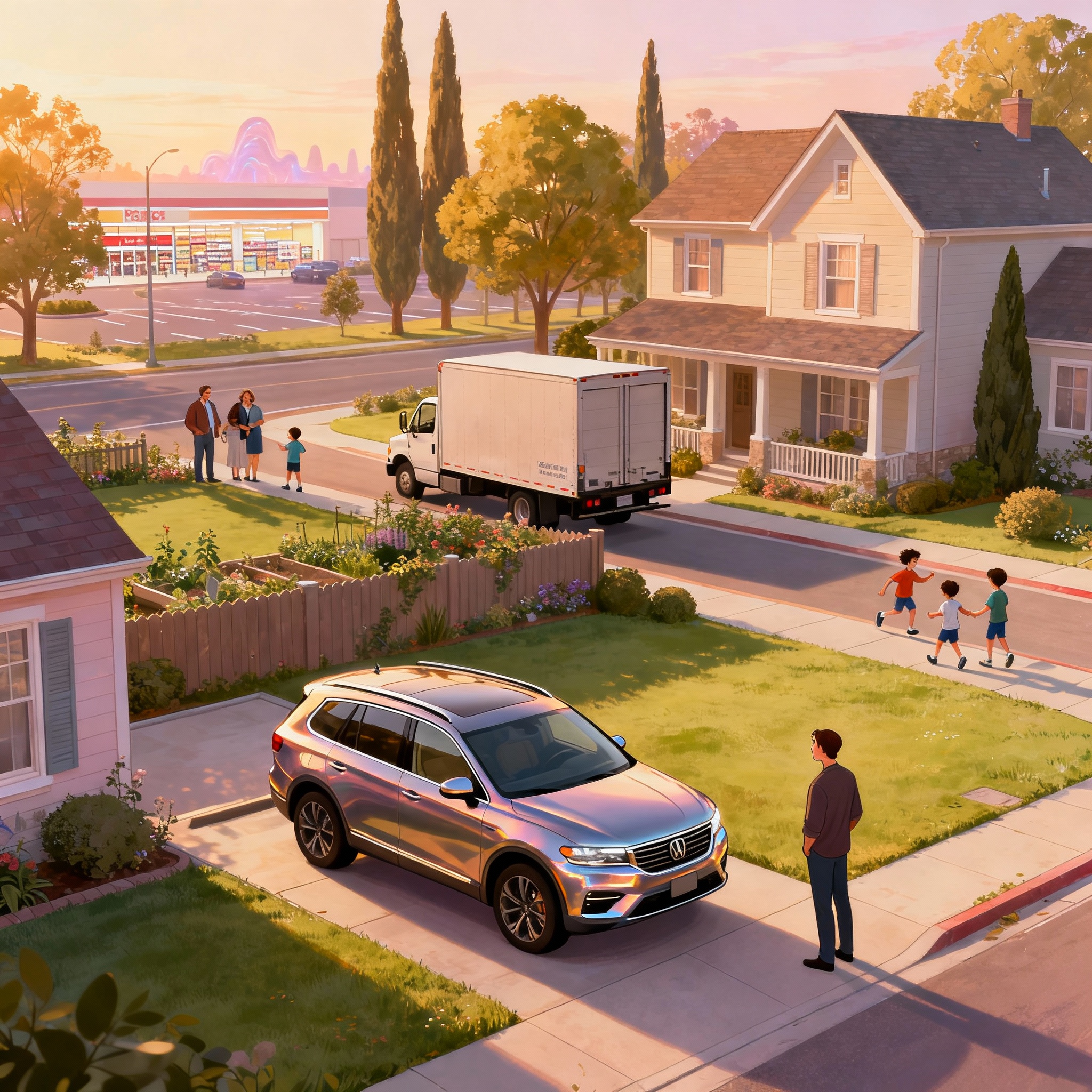
I had a dream that I was living in a beautiful, well-kept neighborhood — the kind of place where every lawn was manicured, the houses were elegant, and the streets felt calm and secure. In the dream, a large delivery was scheduled to arrive at my home, and the delivery team needed full access to the driveway and garage to complete their work. To clear the space, I decided to temporarily move my SUV. Not wanting to take up street parking, I pulled it over and parked it neatly in my next-door neighbor’s driveway. The decision felt harmless in the moment; I told myself it would only be for a short while and that it would be safer there than on the street. Somehow, however, I neglected to ask my neighbors for permission or even to let them know that the car was mine. Part of me rationalized it — I didn’t want to inconvenience anyone, and I assumed there wouldn’t be any issue since it was just temporary. After the delivery was completed, I went back to move my car but found that it was no longer in the driveway. My first thought was confusion — I had only left it there for about an hour. But then it hit me: my neighbors must have moved it. The realization brought a mix of surprise and embarrassment, as if I had crossed an unspoken boundary. Clearly, they didn’t want my vehicle on their property. Worried, I pulled out my phone and opened the geolocation app to track where the car had been moved. The signal surprised me—it showed the SUV was now parked behind a shopping plaza several streets away. I immediately went to find it, weaving through lots and service roads until I finally spotted it there, unharmed but displaced, as if quietly teaching me a lesson through its absence. When I woke up, that lesson lingered with me. I realized that in the dream, my intentions had been practical and innocent—I only wanted to protect my car from imagined harm on the street. But those same protective instincts had led me to overstep a boundary without considering others. By assuming my car would be safer in someone else’s space, I created the very problem I was trying to avoid. It was a gentle reminder that safety rooted in fear can sometimes lead to carelessness, and that permission—both literally and symbolically—is an act of respect and awareness I should never overlook.
Dreams often offer a blend of our subconscious mind’s thoughts, feelings, and insights, revealing inner truths in metaphoric ways. Your dream conveys several layered messages that can be interpreted on both personal and universal levels.
The dream’s setting in a beautiful, well-maintained neighborhood symbolizes the pursuit of harmony and standards of perfection in your life. This represents a phase or desire for stability, peace, and order, reflecting a demand or aspiration to maintain high standards in your personal or professional life.
The scheduled delivery highlights elements of expectation and preparation. It signifies an upcoming change or set of responsibilities you anticipate, suggesting that you are getting ready to "receive" or embrace new opportunities, insights, or projects in your waking life. The need for clear access to your driveway to make room for this indicates that your life needs some reorganization or removal of psychological clutter in order to welcome new developments.
Your decision to park your car in your neighbor’s driveway without their consent suggests a moment of overstepping boundaries, despite benign intentions. In real life, this might reflect instances where you assume liberties or make decisions that involve others without fully considering their comfort or permissions. This speaks to the inherent need to consciously respect others' boundaries and rights, even when solutions seem straightforward or temporary.
Finding your car missing reflects a realization phase — it struck you that your seemingly small action (parking in their driveway) carried more significant consequences. The mix of surprise and embarrassment captures an emotional recognition of the overlooked implications of your decision. This part of the dream highlights the natural influence of unintended actions and their ripple effects in interpersonal dynamics.
Locating your car behind a shopping plaza through a geolocation app shows an introspective journey towards understanding and resolving the emotional lessons presented in the dream. The car’s relocation could represent a detour or a temporary setback that ultimately guides you toward a clearer understanding of the situation — and a realization of unintentional errors. By physically finding the car untouched, it underlines the fact that, although displaced, the situation did not culminate in loss or damage — just personal growth.
Your dream is a gentle narrative about boundaries, respect, and the care inherent in mindful interactions. It suggests a need for awareness in how actions taken for personal protection or efficiency could potentially infringe on others' spaces or rights, even with the best intentions. The emotional and situational journey presented in the dream acts as a metaphorical teacher, emphasizing that self-protective actions, when driven by fear, might blind us to the respect and communication others deserve.
In waking life, reflecting on how you communicate intentions with those around you, and respecting mutual spaces—both physical and emotional—could prevent misunderstandings and foster harmonious relationships. The dream serves as a gentle reminder to balance self-care with sensitivity towards others’ boundaries, speaking to the broader themes of awareness and respect integral to personal growth and community well-being.